Snowman Trek III — Gasa to Bumthang
Lunana and the Gangkhar Puensum base camp, finishing in Bumthang
Gallery
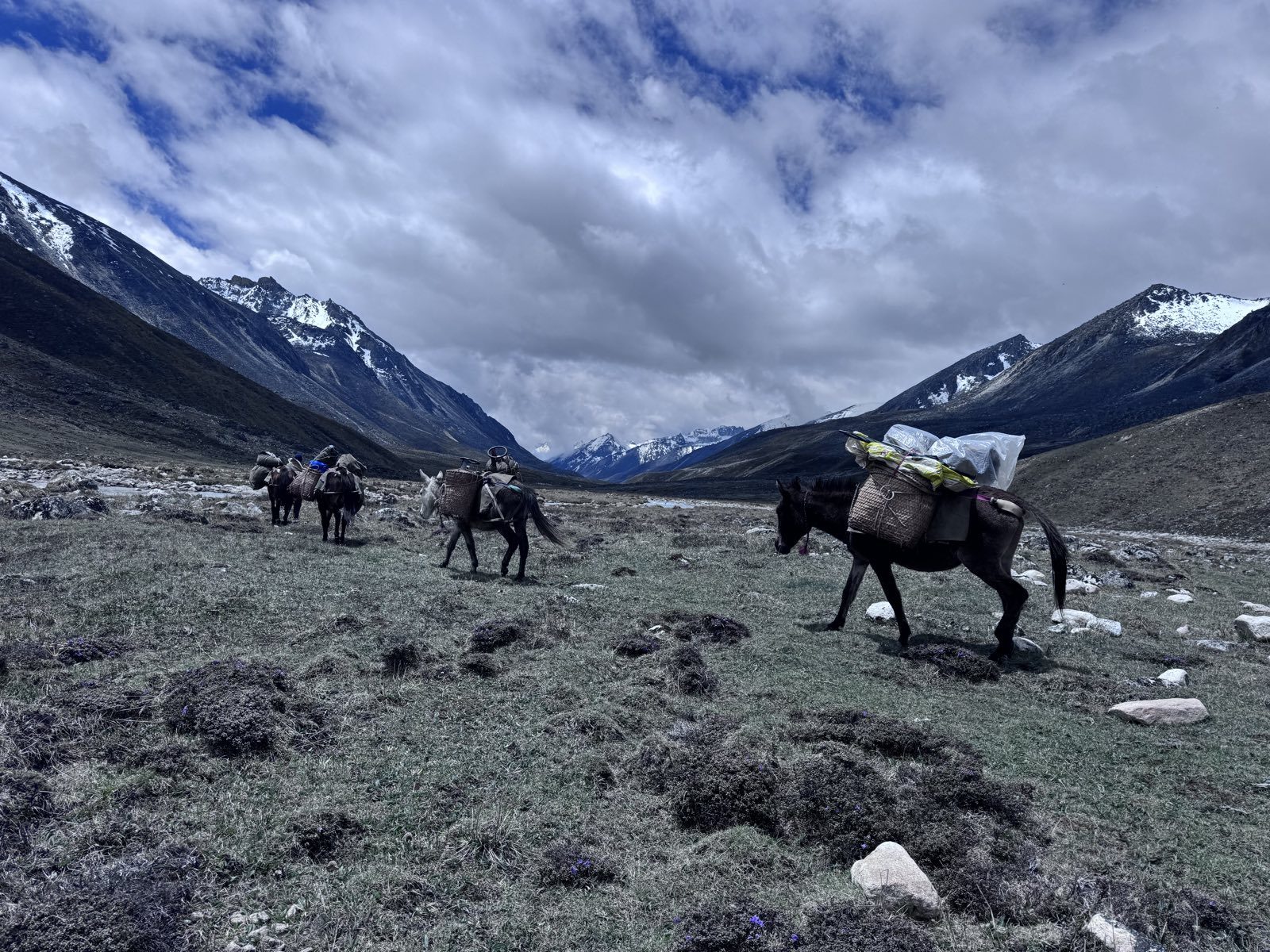
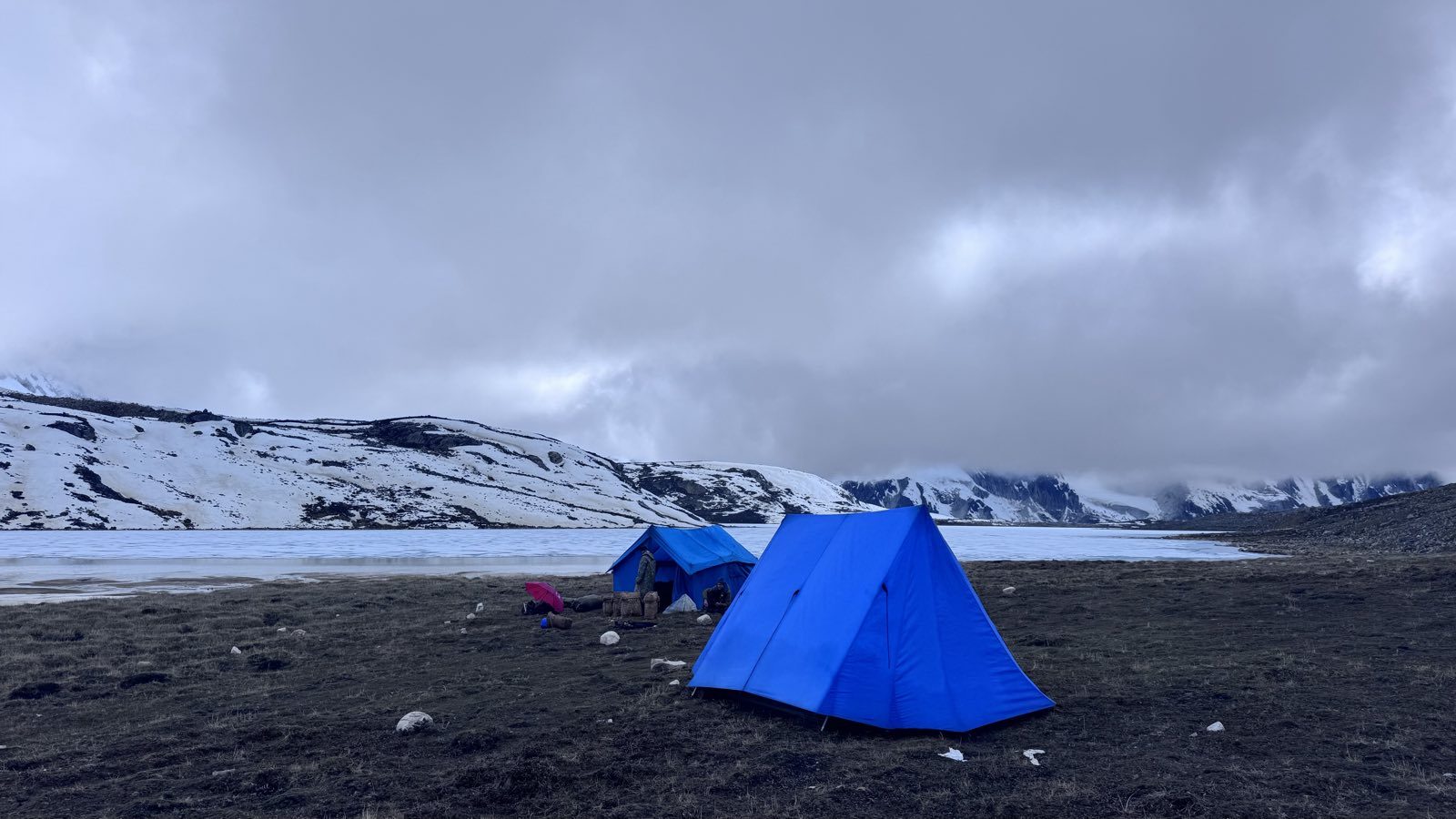
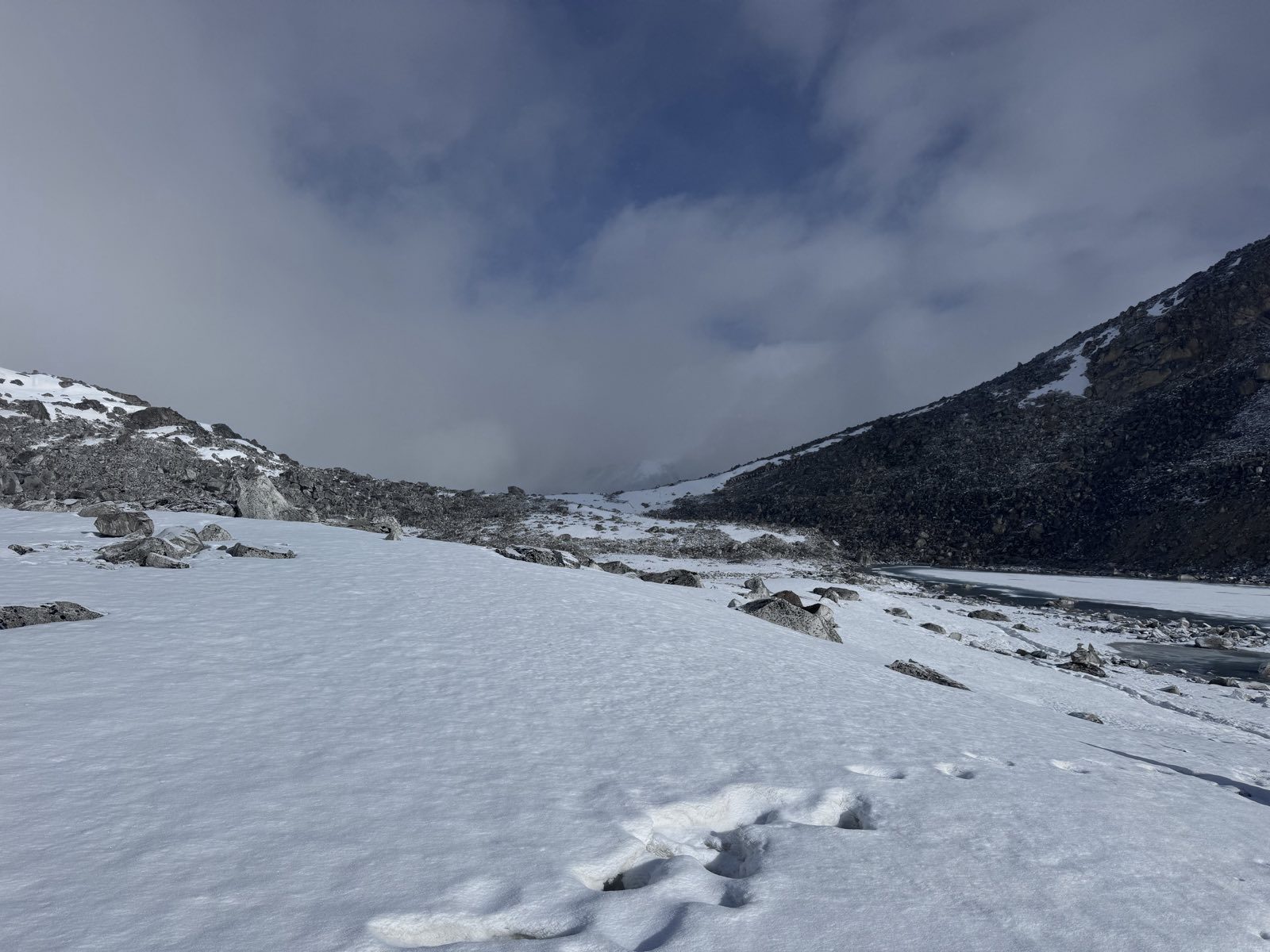
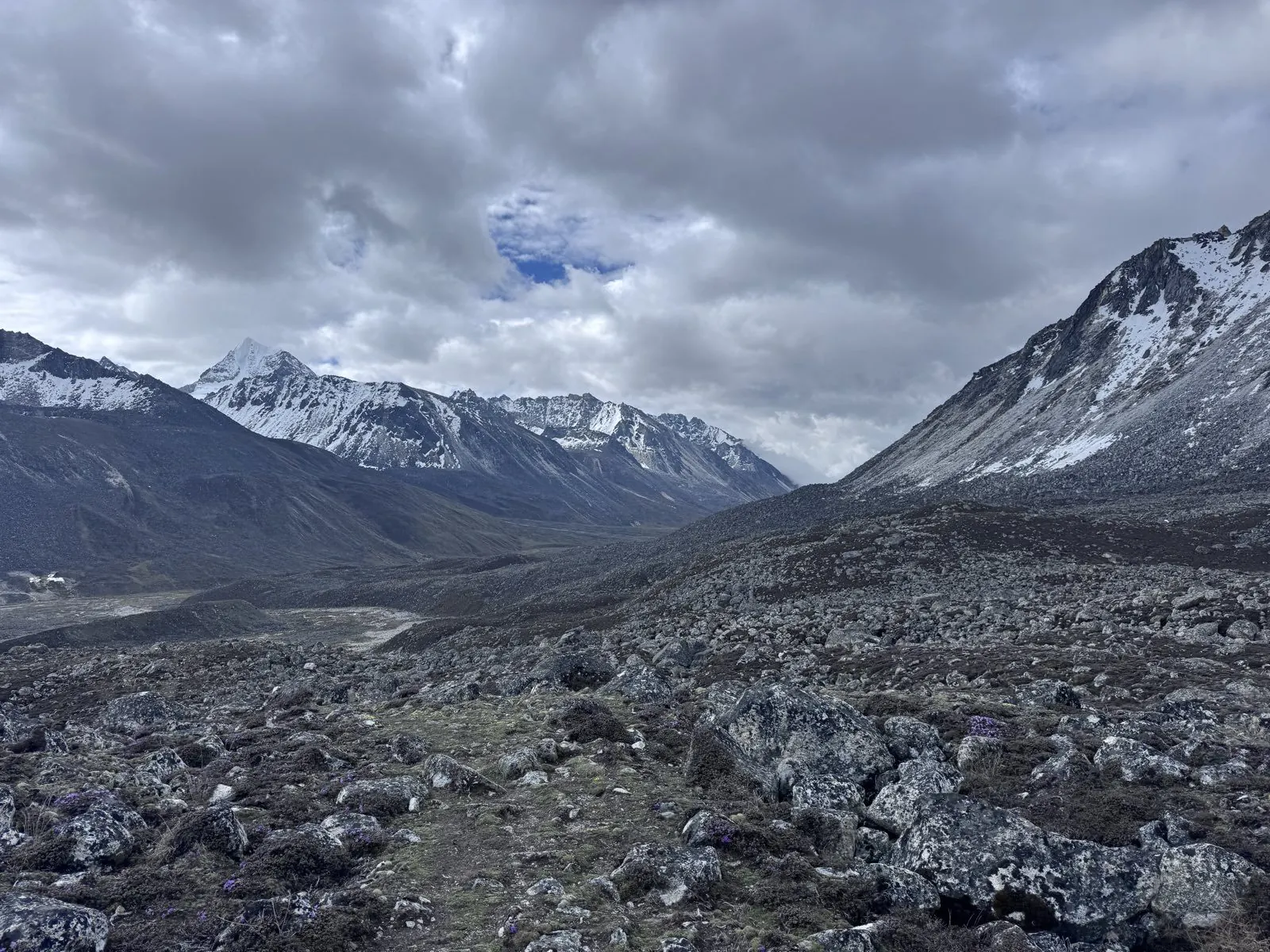
Overview
Snowman III keeps the great eastern half of the traverse — Lunana, the Gophu La and the descent to Bumthang — while replacing the long Paro approach with a drive up through Thimphu and Punakha to Taktse Makhang below Laya.
From Laya the route runs over the Tshomo La and Karchung La into Lunana, through Woche, Lhedi and Thanza, and on to Tshorim and the base camp of Gangkhar Puensum, the highest unclimbed mountain in the world. It finishes with the long descent to the Duer Tsachu hot springs — where Guru Padmasambhava is said to have bathed — and out along the Chamkhar Chhu to Bumthang.
Trip highlights
- Camp at the Gangkhar Puensum base camp (4,970 m)
- Cross the Gophu La (5,230 m) and Karchung La (5,150 m)
- Bathe at the Duer Tsachu hot springs
- Finish in Bumthang, the cultural heartland of Bhutan
Day-by-day itinerary
Arrival at Paro
Day 1On your flight to Paro the journey affords spectacular views of the snow-capped Himalaya, including Jomolhari and Jichu Drake. Our representative will receive you at Paro Airport. If you arrive before noon you can start your trip after lunch, visiting the 8th-century Kyichu Lhakhang. In the evening, explore the town. Overnight in Paro.
Hike to Taktshang Monastery
Day 2The morning hike to the Tiger's Nest makes a fine half-day excursion with beautiful views of the Paro valley. Lunch at the Taktshang cafeteria, then a free stroll in town and the nearby village settlements. Overnight in Paro.
Paro — Thimphu — Punakha
Day 3Drive downstream alongside the Pa Chhu to its confluence with the Wang Chhu, then upstream to Thimphu. Before entering town, visit Simtokha Dzong, the kingdom's oldest dzong, built by Zhabdrung Ngawang Namgyal in 1627. In the afternoon visit the Memorial Chorten, built in memory of the Third King, and Buddha Point, the biggest bronze Buddha of its kind in the world. After sightseeing, drive to Punakha via Dochula. Overnight in Punakha.
Punakha — Taktse Makhang
Day 4Drive from Punakha to Taktse Makhang and reach camp for the night.
Laya halt
Day 5A rest day — but we climb up to Laya village, about an hour and a half, and go around the villages exploring the houses and the people. The Layap are ever welcoming and will readily pose for photographs. Their dress is very typical, particularly that of the women, with bamboo hats decorated with turquoise and silver ornaments. In the evening we return to camp.
Laya / Taktse Makhang — Rodophu
Day 6After descending a while we reach the army camp. We continue following the river until the turn-off point to Rodophu. After lunch we pass through lush rhododendron until we reach camp at 4,350 m.
Rodophu — Narithang
Day 7The trail leads uphill most of the time through dwarf rhododendron bushes and barren areas with lots of ups and downs. We cross the Tshomo La (4,780 m) and descend to the campsite at Narithang (4,500 m), where yak herders keep their summer camp just below Gangla Karchung (6,395 m). Overnight at camp.
Narithang — Tarina
Day 8We start early, for today is a long stretch. We climb to the Karchung La at 5,150 m, from where one can have a splendid view of Tari Gang (7,300 m). Karchung La is the point where two main rivers divide — the front of the pass is the source of the Mo Chhu at Punakha, the back the source of the Pho Chhu. After the pass we descend very steeply to the river bed; care is needed on the descent.
Tarina — Woche
Day 9We trek downhill through coniferous forest, following the upper ridges of the Pho Chhu. The trail then climbs over a ridge and drops to Woche at 3,800 m. After six to seven hours of walking, camp here for the night.
Woche — Lhedi
Day 10The trek starts through juniper and fir forest, gradually entering rhododendron. Climb to the Keche La at 4,480 m for a great view of the surrounding mountains. After the pass, descend to the riverside, walking through the village and enjoying the scenic view of mountains roofing the valley. Follow the river to Lhedi village, where one of the main sources of the Pho Chhu begins. Camp at 3,650 m.
Lhedi — Thanza
Day 11The trek continues along the bank of the river, ascending gradually to Choejung village. Cross the bridge and, after seven to eight hours of trekking, reach Thanza at 4,000 m, where we camp.
Thanza halt
Day 12We take a rest day, exploring nearby lakes and mountains. It provides a refreshing break to rejuvenate you for the rest of the trek.
Thanza — Tshorim
Day 13Having chosen the route to Bumthang, the trek starts by climbing a ridge with a great view of Table Mountain and the Thanza valley below. The ridge is at 4,500 m and rises gradually to 4,650 m. After lunch, walk upwards towards the left side of the bridge to enjoy the view of snow-capped mountains. You reach the campsite of Tshorim after climbing more ridges.
Tshorim — Gangkhar Puensum base camp
Day 14This is one of the highlights of the trek. The day starts with a short climb to Tshorim Tsho; you walk along the side of the lake enjoying a panoramic view of the Gophu La ranges. The last climb to the Gophu La (5,230 m) is very short. After the pass, descend to the base camp, walking along the ridge to enjoy a great view of Gangkhar Puensum. If interested, one can divert to the left to climb Pyramid Peak for a better view, or go down to the base camp near the Sha Chhu.
Gangkhar Puensum base camp — Geshe Woma
Day 15The trail follows the Sha Chhu and descends gradually to Geshe Woma. Six to seven hours; camp at 4,200 m.
Geshe Woma — Warathang
Day 16The path continues following the Sha Chhu for two and a half hours until the stiff climb to the Saka La begins. Visibility along the Saka La trail is poor, so one must watch the top of the ridge for guidance. After lunch near a yak-herder camp you climb to the Saka La (4,800 m). The path then descends to a couple of lakes, and another short ascent is stunning. The scenery is beautiful with small lakes and mountain peaks. Camp at 4,000 m.
Warathang — Duer Tsachu
Day 17An hour's climb leads to the Nephu La (4,600 m). After the pass you descend to the riverside through dense rhododendron, juniper and conifer forest. After the bridge a short climb leads to Duer Tsachu. These hot springs, where Guru Padmasambhava is supposed to have bathed, might be the most stunningly beautiful in the Himalaya — you may want to spend an extra day here. Camp at 3,590 m.
Duer Tsachu — Tshochenchen
Day 18From the hot springs it is a long and steady climb again, with great views of the mountains of Lunana. You will also come across blue lakes and yak-herder huts. Camp at 3,850 m.
Tshochenchen — Duer village (trek ends)
Day 19This is the last day of the trek, and your pack animals change from yaks to horses. The path follows the Chamkhar Chhu, descending gradually with a few climbs in between. The trek ends when you arrive at Duer village, from where you drive to Jakar in Bumthang.
Bumthang — Paro
Day 20After an early breakfast, drive from Bumthang to Paro for the night.
Departure
Day 21After breakfast, drive to the airport, where our team bids you farewell.
What's included
Included
- Sustainable Development Fee (USD 100 per night per person)
- Visa fee (USD 40 per person, one time)
- Transport by private vehicle
- Government-approved 3/5-star hotels (as per your requirements)
- English-speaking guide
- Bottled water in the vehicle
- Permits, entrance fees and sightseeing
- Sleeping tents, sleeping mats and pillows
- Dining tent, kitchen tent and toilet tent
- Tables, chairs, utensils and hot water bags
- Trekking chef and assistants
- Horses to carry trek equipment
- Food supplies
Not included
- Airfare, domestic and international
- Travel insurance
- Tips/gratuities for the guide, driver, trekking crew, cook and horseman
- Drinks and beverages
- Phone and internet bills
- Laundry
- Wire transfer charge/card fee
- Sleeping bag
- Other bills of a personal nature

Let's plan your Snowman Trek III — Gasa to Bumthang
Tell us your dates and who's coming, and we'll tailor this itinerary — pace, add-on days and hotels included.